
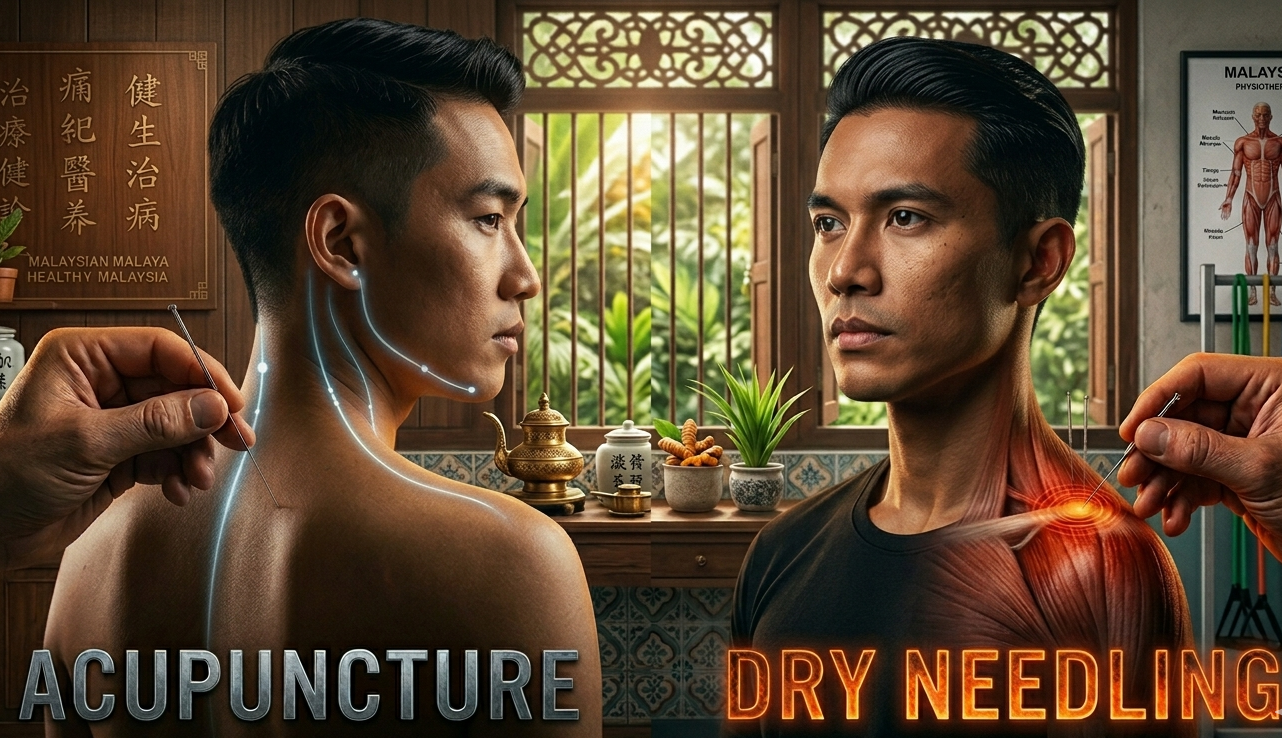
Dry Needling vs Acupuncture in Malaysia
Dry Needling vs Acupuncture in Malaysia
What’s the Difference and Which Is Right for You?
If you are exploring treatment options for muscle pain, chronic discomfort, or overall wellness, you may come across both Dry Needling and Acupuncture. Although they may look similar, they are based on different principles and are practiced within different healthcare frameworks in Malaysia.
What Is the Main Difference?
The key difference lies in their theoretical foundation and treatment approach.
| Aspect | Acupuncture | Dry Needling |
| Origin | Traditional Chinese Medicine (TCM) | Modern Western medicine |
| Theory | Qi, meridians, holistic balance | Anatomy, muscles, trigger points |
| Focus | Whole-body regulation | Localised muscle pain |
| Purpose | Restore balance & overall health | Relieve muscle tightness & pain |
How Does Acupuncture Work?
Acupuncture involves inserting fine needles into specific points on the body to regulate the flow of Qi and restore balance. It is commonly used for:
- Pain management
- Stress and anxiety
- Digestive issues
- Sleep disorders
- General wellness
It takes a holistic approach, addressing both symptoms and underlying imbalances.
How Does Dry Needling Work?
Dry Needling targets myofascial trigger points in muscles. It is commonly used for:
- Muscle tightness
- Sports injuries
- Neck and back pain
- Limited mobility
It focuses on musculoskeletal conditions, aiming for faster relief of muscle-related symptoms.
Who Provides These Treatments in Malaysia?
In Malaysia, these therapies are generally provided by different groups of practitioners:
- Acupuncture: Practiced by registered Traditional Chinese Medicine (TCM) practitioners under the Traditional & Complementary Medicine (T&CM) framework
- Dry Needling: Typically performed by physiotherapists or medical practitioners with relevant training
Regulations and scope of practice may vary, so it is important to seek qualified professionals.
Which One Should You Choose?
The choice depends on your condition and treatment goals:
- Choose Acupuncture if you are looking for:
- Holistic health management
- Long-term balance and wellness
- Support for multiple body systems
- Choose Dry Needling if you are looking for:
- Targeted muscle pain relief
- Sports injury recovery
- Quick relief of muscle tightness
In some cases, both approaches may complement each other.
Conclusion
Both Dry Needling and Acupuncture have their roles in managing pain and improving health.
…………………………………………………………………………………………………………………………………………………………………………………………………….
Disclaimer: This article is for general informational purposes only and does not constitute medical advice, diagnosis, or treatment. Please consult a qualified healthcare professional before making any healthcare decisions.