
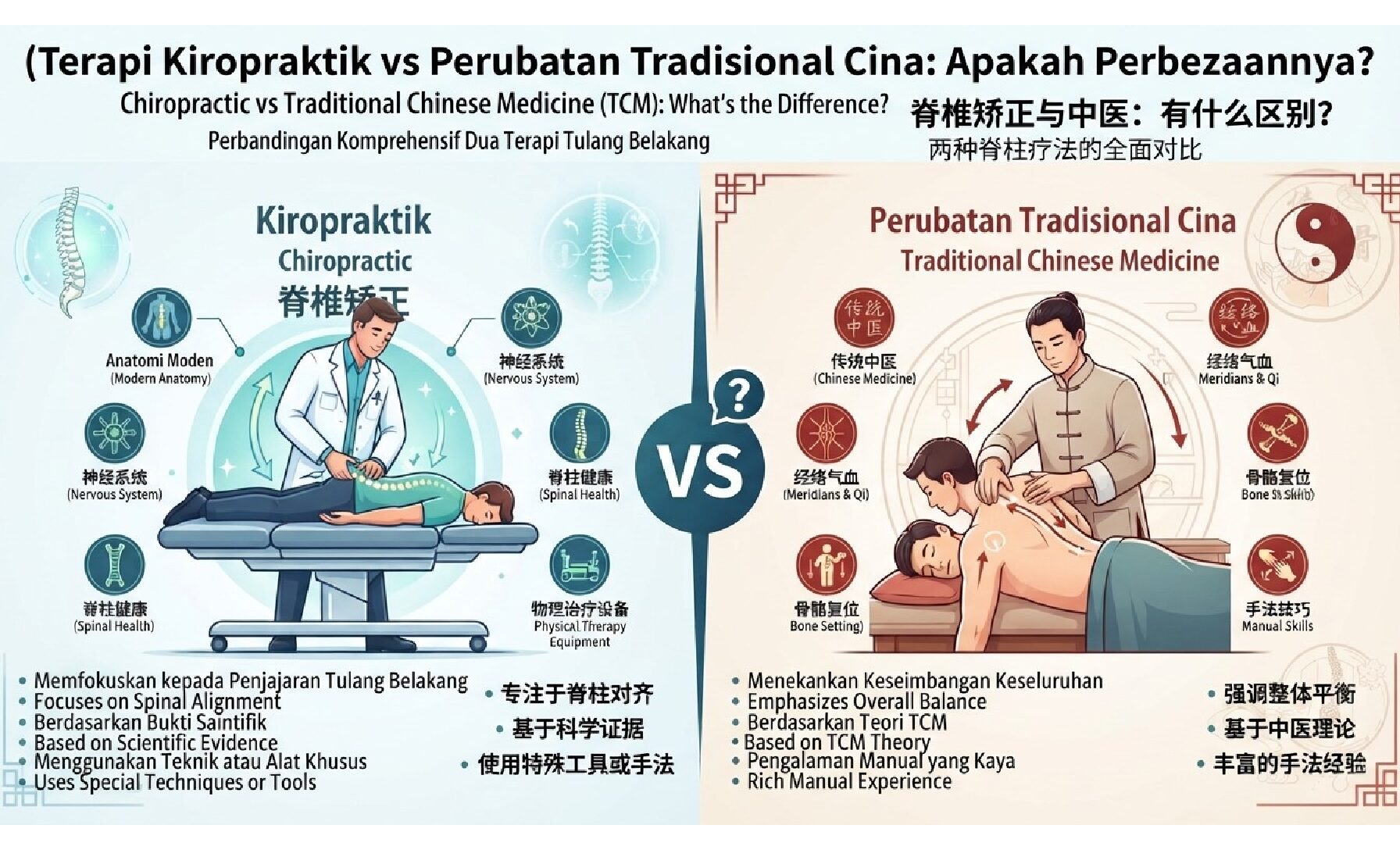
Chiropractic vs Traditional Chinese Bone Setting: What Are the Differences?
Understanding Two Common Forms of Manual Therapy
When experiencing neck pain, shoulder stiffness, back discomfort, restricted joint movement, or posture-related issues, many people may encounter either Chiropractic or Traditional Chinese Bone Setting.
Since both approaches primarily involve hands-on techniques and focus on improving joint, skeletal, and physical function, they are often confused with one another and sometimes assumed to be the same form of treatment.
In reality, Chiropractic and Traditional Chinese Bone Setting originate from different medical systems and have distinct histories, theoretical foundations, and clinical focuses.
Understanding their differences can help individuals make more informed healthcare decisions.
What Is Chiropractic?
Chiropractic originated in the United States.
In 1895, Daniel David Palmer (D.D. Palmer) performed the first Chiropractic Adjustment, and in 1897 he established the first Chiropractic school.
The word “Chiropractic” comes from the Greek words:
- Cheir (hand)
- Praktikos (practice)
Meaning:
“Treatment performed by hand.”
Modern Chiropractic primarily focuses on:
- Spinal function
- Joint mobility
- Neuromusculoskeletal function
- Posture and biomechanics
- Musculoskeletal pain management
During treatment, practitioners may utilize:
- Spinal adjustments
- Joint manipulation
- Soft tissue techniques
- Exercise recommendations
- Postural advice
In Malaysia, Chiropractic is recognized as one of the Traditional and Complementary Medicine (T&CM) practice areas regulated under the Traditional and Complementary Medicine Act 2016 (Act 775).
What Is Traditional Chinese Bone Setting?
Traditional Chinese Bone Setting is an important component of Traditional Chinese Medicine (TCM) traumatology and orthopedic practice, with a history dating back hundreds of years.
Ancient Chinese physicians developed techniques for managing fractures, dislocations, soft tissue injuries, and traumatic conditions through manual reduction, tendon regulation, and functional restoration.
Traditional Chinese Bone Setting emphasizes:
- Equal importance of bones and soft tissues
- Harmony between bones and muscles
- Meridians and circulation of Qi and Blood
- Functional recovery
- Integration of local and whole-body considerations
Today, it is commonly used for:
- Traumatic injuries
- Joint misalignments
- Soft tissue strain
- Neck, shoulder, and lower back discomfort
- Posture-related issues
Treatment may include:
- Bone-setting techniques
- Soft tissue manipulation
- Tui Na (Chinese therapeutic massage)
- Acupuncture
- Cupping therapy
- Herbal external applications
Specific treatment approaches vary according to the individual’s condition.
In Malaysia, Traditional Chinese Bone Setting generally falls within the scope of Traditional Chinese Medicine practice and is also regulated under the Traditional and Complementary Medicine Act 2016 (Act 775).
What Do They Have in Common?
Although they originate from different healthcare traditions, Chiropractic and Traditional Chinese Bone Setting share several similarities.
-
Both Are Drug-Free Approaches
Both primarily rely on manual assessment and treatment rather than medication.
-
Both Emphasize Physical Function
They focus on:
- Joint mobility
- Body balance
- Postural concerns
- Musculoskeletal function
-
Both May Be Used for Musculoskeletal Conditions
Examples include:
- Neck pain
- Shoulder stiffness
- Lower back pain
- Restricted joint mobility
- Posture-related discomfort
-
Both Emphasize Professional Assessment
A proper assessment is usually an important step before developing an appropriate treatment plan.
How Are They Different?
Different Origins and Theoretical Foundations
Chiropractic originated in the United States and developed within a modern Western healthcare framework, focusing primarily on the neuromusculoskeletal system.
Traditional Chinese Bone Setting originated from Traditional Chinese Medicine and is closely associated with TCM traumatology, meridian theory, and musculoskeletal concepts.
Different Areas of Focus
Chiropractic commonly focuses on:
- Spinal function
- Joint mobility
- Neuromusculoskeletal function
- Posture and biomechanics
Traditional Chinese Bone Setting commonly focuses on:
- Bone and soft tissue relationships
- Meridian and Qi-Blood circulation
- Traumatic injuries
- Whole-body balance
Different Treatment Approaches
Common Chiropractic techniques include:
- Spinal adjustments
- Joint manipulation
- Soft tissue techniques
- Exercise prescriptions
Traditional Chinese Bone Setting may incorporate:
- Bone-setting techniques
- Tendon regulation techniques
- Tui Na
- Acupuncture
- Herbal external therapies
The actual treatment approach depends on the practitioner’s training and the patient’s condition.
Conclusion
Although Chiropractic and Traditional Chinese Bone Setting are both hands-on treatment approaches, they originate from different healthcare systems.
Chiropractic primarily focuses on spinal, joint, and neuromusculoskeletal function, while Traditional Chinese Bone Setting emphasizes the relationship between bones, muscles, meridians, and overall body balance.
Understanding their history, philosophy, and clinical focus can help individuals make more informed choices when seeking healthcare services.
…………………………………………………………………………………………………………………………………………………………………………..
Disclaimer: This article is for general informational purposes only and does not constitute medical advice, diagnosis, or treatment. Please consult a qualified healthcare professional before making any healthcare decisions.